Tuesday, October 11, 2022

NSS Western Regional Meeting


The Southern Nevada Grotto hosted the 2022 NSS Western Regional meeting at Great Basin National Park. This last happened in 2018, during a cold and blustery weekend. This year we were blessed with a beautiful weekend. Cavers were eager to check out some of the caves of eastern Nevada, and registration swelled to 120 and capped, as the campground and caves can hold only so many people!

In addition to over 10 cave trips offered each day on Friday, Saturday, and Sunday, there were also some special opportunities. One was a four-hour self-rescue for cavers class. Different stations highlighted alternative ways to ascend and descend;

how to set up a traveling haul with just a couple pulleys and your regular SRT (single-rope technique) gear; 

how to rescue someone stuck on a rope tied off (instead of rigging for contingency, which would have made the rescue so much easier!); 

how to navigate a deviation, rebelay, J-hang, and guided rappel;

and some useful knots.

If you're a caver, can you ascend with a webbing harness you made yourself, a Garda hitch (two carabiners), and a prussik? Katrina can!

Later on Friday there was a special geology tour of Lehman Caves and a trip to Rose Guano Cave to see the bat flight. The bat numbers have plummeted over the past couple of years due to drought, but there were still a few that could be seen with a special instrument.

Saturday mid-morning the campground was quiet because most cavers had departed for caves or sight-seeing. 

In the afternoon, several presentations in Baker Hall highlighted various aspects of caving. Louise Hose spoke on the geology of Lehman Caves.

Alyssa Richards showed a poster about her studies of packrat middens and how they show what vegetation grew in the area over thousands of years.

EC Moe introduced the western region of the Vertical Training Commission, a new commission that is being set up to train cavers proper methods for ascending and descending rope in caves.

Matt Paulson highlighted Caves of Utah's House Range, located about 1.5 hours from Baker.

Then it was time for Saturday night's catered dinner.

The hall filled with hungry cavers. Afterwards it was time for the annual Western Region business meeting.

Then it was time for the auction, raising money for the Western Region and the Western Cave Conservancy.

There was likely good partying Saturday night, but I was exhausted and went to bed. I was up Sunday to attend the pancake breakfast fundraiser put on by the EskDale HS Choir. It was delicious.

Then I led a cave cleanup in Lehman Caves in Great Basin National Park focused on removing old carbide. Carbide lamps used to be the main light source for miners and cavers. Back in the day, when the carbide powder had been spent (used up), it was dumped out, and new carbide powder and water were added to the lamp. These little dumps of white powder are toxic to cave invertebrates. 

If the spent carbide is dry, it's in powder format. If it's moist, it will be a clump. Some people tried to hide where they dumped it, making it harder to get to.

Most of the carbide dumps are near pools of water. That way the user didn't have to bring in extra water but could use water from cave pools.


We used a variety of tools to remove the carbide, including brushes, tweezers, turkey basters, and small vacuum.

As a reward, participants got to visit parts of the cave that are normally off limits, like the Talus Room.

Altogether, we removed nearly a five-gallon bucket of carbide!

The mighty carbide cleaners

It was a great weekend of seeing old friends, meeting new ones, sharing a passion for caves, and enjoying some wonderful weather and camaraderie. 

The Western Regional meeting is held every fall in various locations. You can learn more by joining the Facebook page or checking out the main National Speleological Society website

Friday, September 2, 2022

It's Sunflower Season!


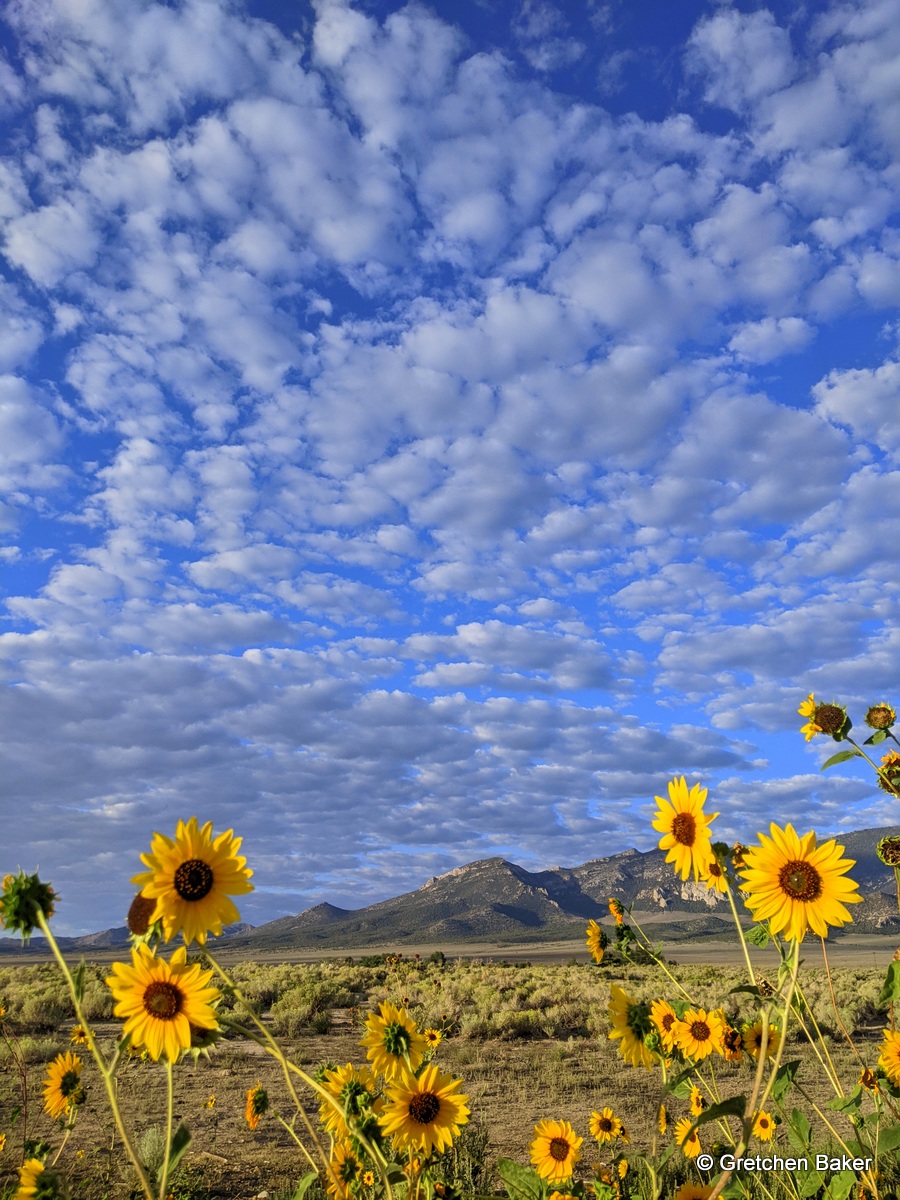
Oh my, it's been a busy summer. I'm finally getting back to my blog, and I'm going to start with an easy post--my favorite flower, sunflowers! They are blooming all over the Great Basin right now. I wouldn't normally take a lot of photos of them, but we've had some fantastic skies, like the one above, and the sunflowers make such a nice foreground contrast.

I appreciate clear skies with sunflowers, too, especially at night, when the bright Milky Way fills the sky. We're lucky to live in a Bortle Class 1 (the darkest skies), so the Milky Way is super visible here.


Sometimes I just pause to enjoy the symmetry--or almost symmetry--that can be found in a sunflower closeup.


Although sunflowers are often found in bunches, sometimes just a single one makes a stand.


One thing I learned this summer is that bees overnight sometimes in sunflowers. All the ones I've seen have been nestled into the bottom of the flower.


More cool skies. The scientific name for the sunflower genus is Helianthus, which literally means sun flower. There are about 70 species, and they are native to North and Central America. The native one here is Helianthus annuus. 


Immature sunflower buds exhibit heliotropism, where they follow the sun. But mature sunflowers mostly face east (something to keep in mind when planning sunflower photo shoots). 


Ready for more bees?

This was a different morning with gorgeous skies.


I couldn't resist trying to get a photo of the rainbow with a sunflower in it!


Finally, another nod to sunflowers under the Milky Way. Life is good.
If you have a favorite sunflower shot, I'd love to know! Thanks for taking a look at this post.

Sunday, May 29, 2022

Technical Rigging Class in Hungary

In May 2022, my friend Rene and I had the opportunity to go to Hungary for the Technical 2 Rigging Class put on by the Hungarian cave experts as part of a technical exchange with the National Cave Rescue Commission. We had signed up a few years prior, but due to Covid delays, had to wait. But finally the time came!

We arrived in Budapest (more on that later), and soon were headed to the beautiful northeastern town of Svogliget. Our first full day we attended lectures in a restored building.

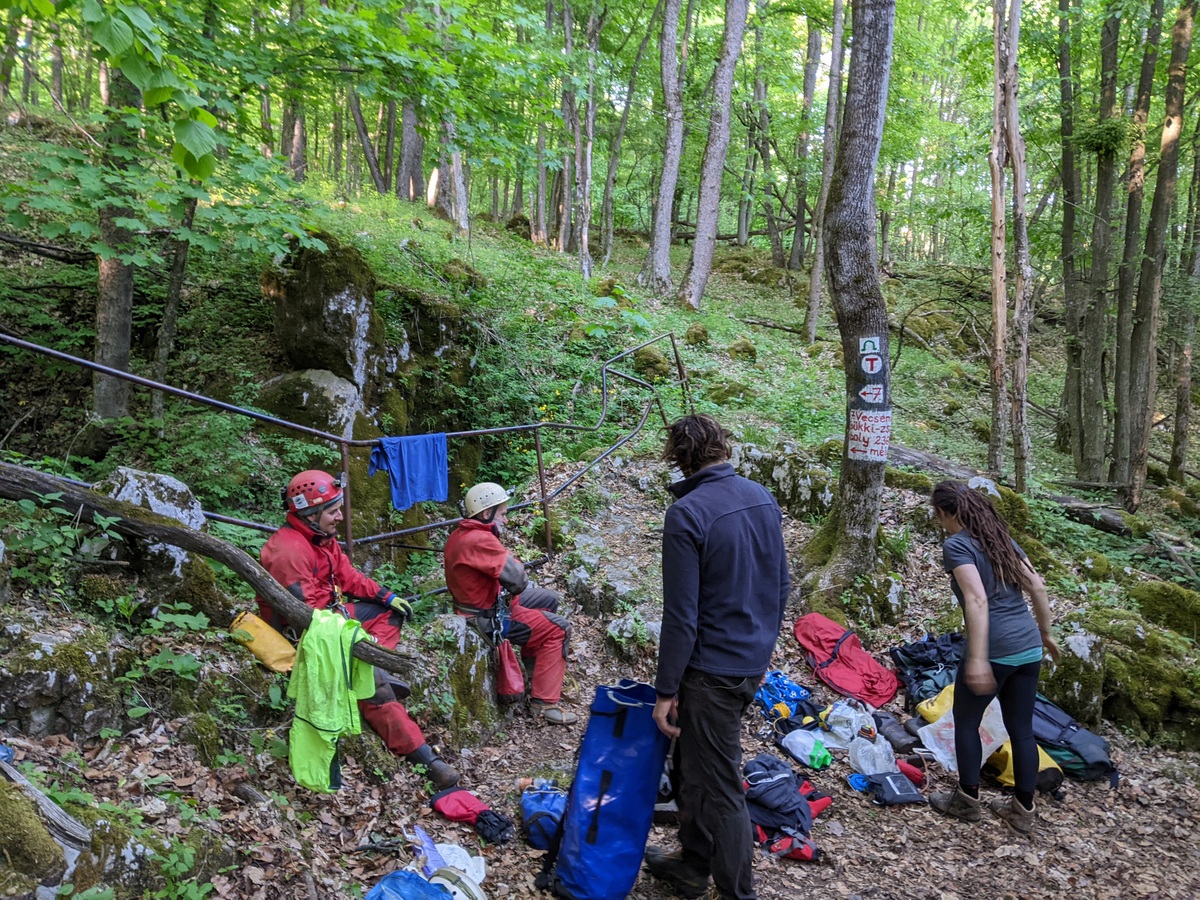
The next day it was time to head up to the caves! Carrying lots of ropes, carabiners, and hangers, plus our vertical and caving gear, we hiked about 2 hours through an extraordinarily beautiful forest.

We then practiced rigging approach lines and used both natural and artificial anchors to enter a couple caves.

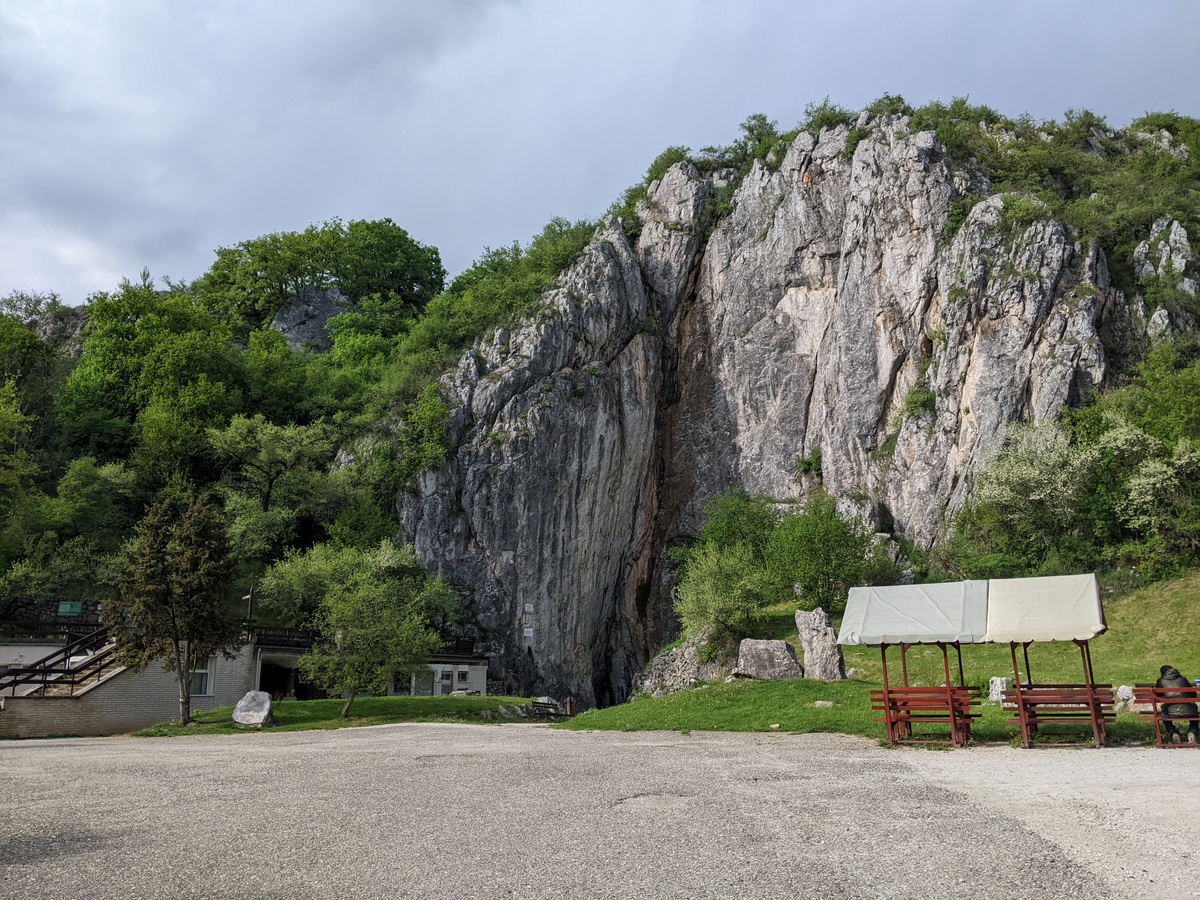
During the week we also did practice on cliffs near the entrance to Baratla Cave, an amazing tourist cave in Aggtelek National Park in the town of Aggtelek. 


The symbol for Aggtelek National Park is the Fire Salamander (Salamandra salamandra). I was really excited to see one. (and just one, no others during the trip)

After about a week I started figuring out where I was. Fortunately, the Hungarians were very friendly and helpful and didn't leave me behind anywhere!

The forest trails were extremely well marked and cared for. But we saw no other hikers all week. There's a 1,100-km long trail that crosses Hungary that sounds like it would be a fun destination.

One day we went to nearby Slovakia to visit a cave in Slovak Karst National Park. Crossing the boundary from Hungary to Slovakia was like driving across a stateline in the U.S. No need to slow down. But across the line, all the signs changed language! Slovakian is nothing like Hungarian. In fact, every country that borders Hungary (Austria, Romania, Ukraine, Serbia, Croatia, Slovenia, Slovakia) all have a different language.

One of the eye-catching things in the cave was this blue slug. Thanks to iNaturalist, I know it's a Carpathian Blue Slug (Bielzia coerulans). They're endemic to the Carpathian Mountains of Central and Eastern Europe and turn blue when they reach 100-140 mm in length. (More info here.)


The cave also had a lovely series of rappels, including next to this pool. It didn't smell the best, though, decaying frogs made us try to move a little faster!

The last big cave I went to is listed for the hikers to visit the entrance. We had permission to go beyond, so we descended nearly 600 feet, rigging the cave as we went.


Part of the cave had old ladders from when it was first explored in the 1950s and 1960s. I felt a lot safer on rope than on these ladders!


On the last day of the class, while the Hungarian students were completing their certification booklets, we got to visit a couple tourist caves. One was the amazing Baratla Cave. We joined a tour and at first followed a small river through a series of rooms. 


Then we went into some even bigger rooms with even bigger speleothems, reminiscent of caves in the Guadalupe Mountains of New Mexico.

In the afternoon we went into the now-closed Rokoczi Cave, closed due to lack of tour guides. The cave is very steep, and we saw some cool formations and two lakes. There is still passage to be found underwater.

The caves in Hungary are quite impressive. There are 170 under the city of Budapest. In Aggtelek National Park there are over 200. This is a cave-rich country! Rene and I learned from great teachers how to do things the Hungarian way, which is very efficient. I am so glad to have had the experience.

On our last evening in Svogliget, we went for a walk up a hill that overlooked the town., with the national park int he background. 

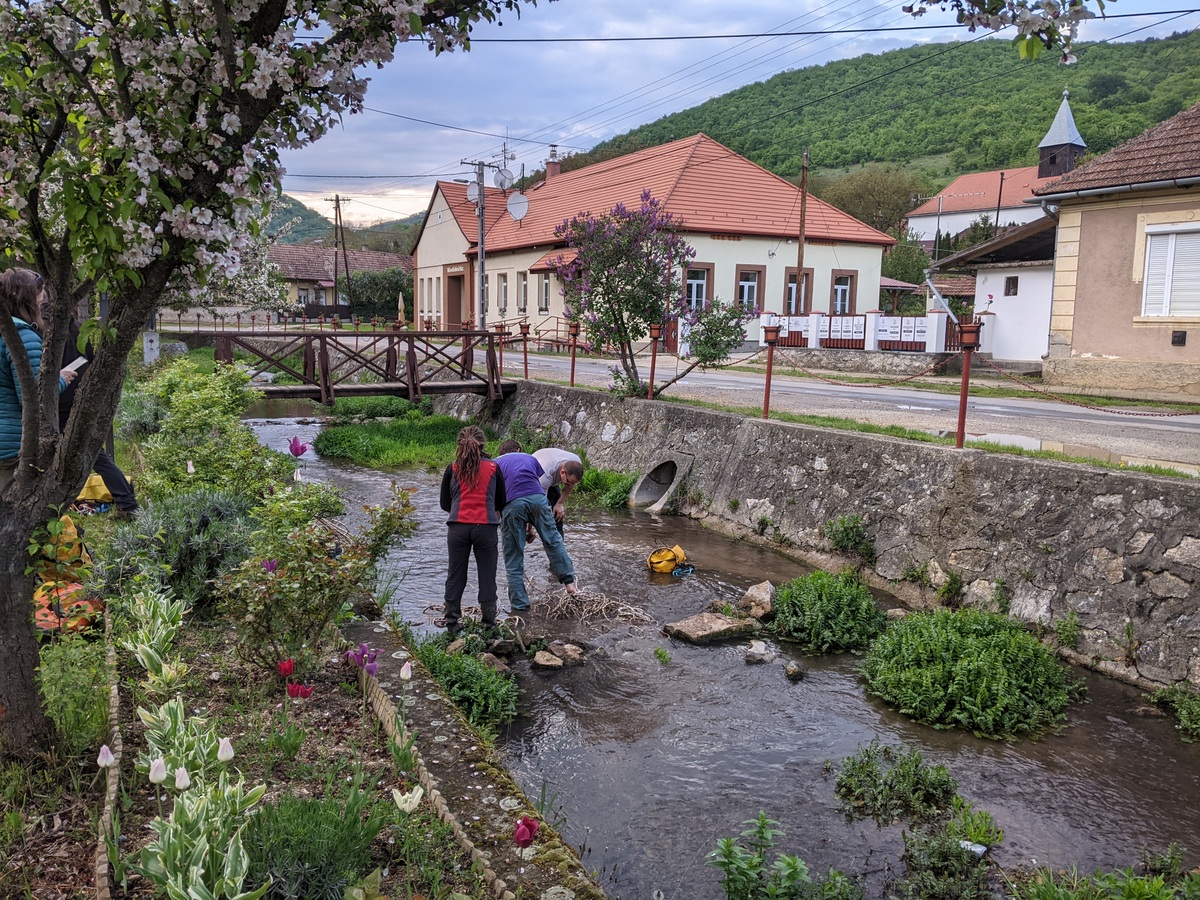
Another memory from the class: washing cave gear in the stream that runs through town. The town was quite adorable.


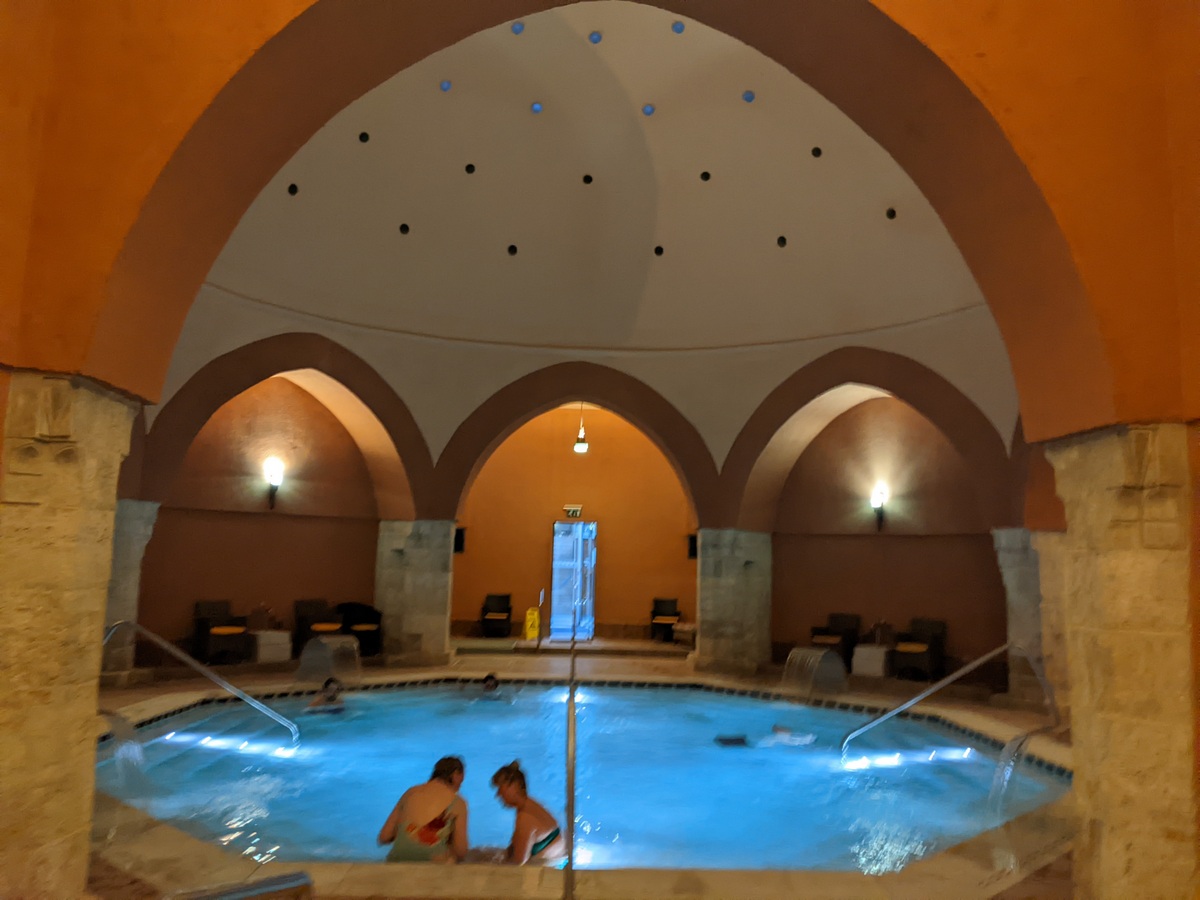
The class ended and we had 1.5 days in Budapest. We headed first to a thermal bath and even got massages (explaining that our numerous bruises were from caving and not from getting beat up!). 

We lucked out and saw the full moon rising over the Parliament building across the Danube River.

The next day we went to Castle Hill, St. Steven's Basilica (where we heard an organ concert)...

...the Parliament...

...and an evening boat ride. It was a lovely day exploring Budapest, and there's still so much more to see!

I can't thank our hosts enough, and I really look forward to when Hungarians come to the U.S. and we can show them around!
Related Posts Plugin for WordPress, Blogger...

blogger templates